
AI agents that run your brand’s ChatGPT Ads, with expert human oversight that keeps the sales growing.
Free to install. Live in about two minutes, no theme code.



























Getting started
3 simple steps to get startedBoost your sales
Start free with tracking, choose your growth plan, and let AI agents continuously optimize how your products show up and sell.
against real Shopify orders99.5%
Getting in is easy. That’s the problem.
One click and your whole catalogue is in ChatGPT — every product, every variant, every image. So is everyone else’s in your category.
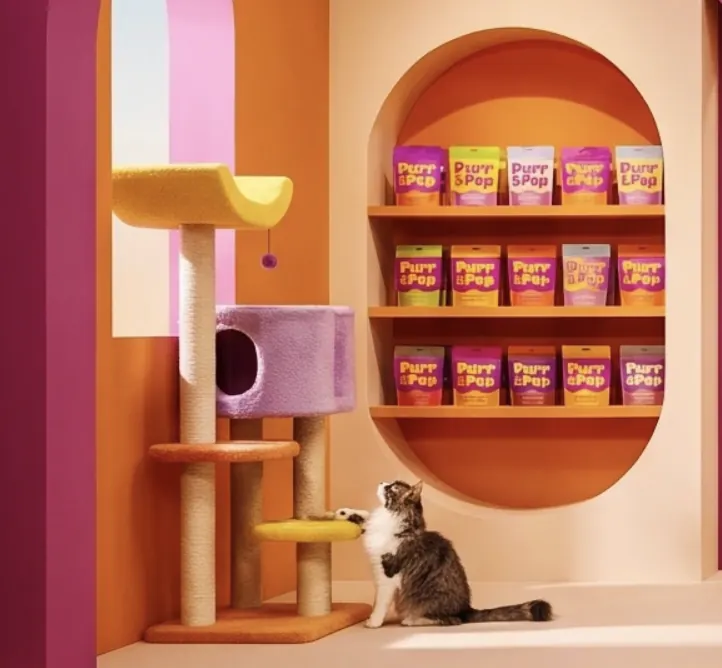
A one-click import is a static dump of your store: everything visible, nothing prioritised. Fifteen pouches on the shelf, all eligible, none chosen. Being in the catalogue is not the same as getting sold.
An AI squad that boosts your ChatGPT sales
One widely-cited account returned 1.49x on ChatGPT Ads. Another, run by AI, went from 2.4x to 4.1x in six weeks. Same channel — the difference is what happens to the catalogue behind the ad.

One catalogue, many recommendations
Your customers are already asking ChatGPT and doing their research there. AI Recommendation Ads put your products inside those conversations.
Specialised AI and expert humans run your ChatGPT Ads end to end, so your products get recommended and bought — not just seen.
Whatever you sell, the brand that gets recommended is the one whose products the model can actually understand.
The AI runs it. Human experts own it.
An agent will optimise relentlessly toward whatever you point it at — including the wrong thing. Specialists set the boundaries it works inside, read what the numbers cannot see, and own every call that changes direction.
You set the envelope
Spend ceilings, margin floors, excluded products and brand voice. The agents move freely inside those lines and never outside them.
The big calls escalate
Scaling a winner past its stock cover, raising the ceiling, entering a new category or changing how the brand speaks — each one stops and waits for a person.
Experts read what data can’t
Stock risk building three weeks out, a launch that shouldn’t compete with itself, a category that converts but reads wrong for the brand. None of that is in the numbers.
Humans plan the season
Gift-intent language appears for about six weeks a year. Someone decides when to pivot into it, what the promotional calendar looks like, and when to pull back out.
Built for every agent surface, not just ChatGPT ads
Your catalogue is the asset, not the campaign. Build it once and it serves whatever surface the shopper happens to be standing in.
Protocol-native feeds
Your catalogue speaks UCP and ACP, so any compliant agent can discover and transact against the same data layer. One feed, every surface — not a new integration each time a surface launches.
Every surface, one layer
ChatGPT is the largest AI shopping surface today. Gemini, Perplexity, Copilot and agent-led buying compete for the same intent — and read the same catalogue, with one view of what each is worth in profit.
Connect once
Shopify, WooCommerce and more. No developer, no tag manager, no integration project — and no new build each time another AI surface opens up.
A layer that compounds
Every brand contributes prompt-to-product demand data and margin-level outcomes. A brand joining today inherits what the network has already learned about its category.
Each layer makes the others work. Enrichment without prompt data optimises for the wrong intents. Prompt data without checkout produces demand that leaks. Neither improves without profit-level attribution telling the system what actually worked.
Automatic inside the lines. Never outside them.
You should never discover a change you didn’t sanction. The boundary is yours to set, and the agents stop at it.
Happens without asking
- Budget shifts within your approved envelope
- Creative variants in your approved voice
- Pausing products that lose money or run low on stock
- Feed refreshes when the catalog changes
Stops for a person
- Raising the spend ceiling
- Advertising a new category or launch
- Changing how the brand describes itself
- Anything below your margin floor
Why this channel is worth the attention
42%
Better conversion from AI-referred retail traffic than non-AI traffic in March 2026 — reversing a gap that ran the other way a year earlier.
Adobe Digital Insights393%
Year-over-year growth in AI-driven traffic to US retail sites in Q1 2026, measured across more than a trillion visits.
Adobe Digital Insights70.6%
Of AI referrals are invisible in standard analytics setups, so most brands undercount this channel by three to four times.
Reported industry estimate, 2026150+
Shopify brands onboarded to xpay in about 40 days — agentic commerce has moved from the innovation slide to the growth plan.
xpay, September 2026Pricing
Start free. Pay when you want it handled.
The pixel costs nothing, because you should see the channel before you fund it. From $250 the agents run the account end to end. Above that they build the page the click lands on — and eventually the checkout itself.
Pixel
Anyone running ChatGPT Ads who wants the tracking fixed before spending another dollar.
No card. Live in about two minutes, no theme code.
- ChatGPT Ads Pixel, one-click install
- Server-side Conversions API
- Events confirmed accepted by OpenAI
- The ChatGPT revenue your analytics files as “direct”
Run
Brands ready to advertise, who want the account run properly without hiring for it.
Up to 100 advertised SKUs. No percentage of your ad spend.
- Everything in Pixel
- End-to-end ChatGPT Ads management — setup, structure, creative, bidding
- AI Product Feed — only your winners, ranked for agents
- Prompt Intelligence Engine, run continuously
- Autonomous campaign optimizer, running 24/7
- Conversions reconciled against real Shopify orders
- Organic vs paid ChatGPT revenue, split out
- Revenue and net margin by product, not just by campaign
- Weekly expert review, your ceilings and floors
Pages
Brands whose ads are working and are now losing the click, not the impression.
Up to 300 advertised SKUs.
- Everything in Run
- AI PDP pages, generated per campaign — built for the prompt, not your homepage
- Prompt-matched product versions, refreshed as demand shifts
- Real-time page generation for long-tail conversational intent
- Page-level conversion data, tied back to prompt and product
- Continuous page testing, winners kept automatically
Commerce
Brands selling into AI surfaces, not just advertising on them.
The full agentic stack. Unlimited SKUs.
- Everything in Pages
- Agentic checkout — shoppers and agents buy without leaving the conversation
- Protocol-native feeds across UCP and ACP
- Real-time price, stock and variant sync across markets
- Agent-ready catalog for every compliant surface
- Instant Checkout eligibility and setup
- Dedicated growth specialist
- Quarterly incrementality testing
Ad spend is paid directly to OpenAI and is not included. Plans are month to month, and two months are free on annual billing. Most brands run the free pixel for two to three weeks, move to Run once they can see what the channel returns, and add Pages when the ads are working but the landing page is not.
Questions, answered plainly.
What DTC teams ask before handing their ChatGPT Ads to an agent.
Still deciding whether this fits your catalogue? Tell us what you sell and we’ll tell you honestly.
Talk to usNew to the channel? Read how ChatGPT Ads work →
How is this different from running ChatGPT Ads myself?
You can absolutely run them yourself in OpenAI’s Ads Manager. The difference is cadence and catalogue depth: deciding which of your SKUs deserve budget, rewriting every product row for contextual matching, and reallocating spend on conversion signal is a daily job across hundreds of products. The agents do it every day, the same way each time.
Do I need to hand over control of my ad account?
No. You set the envelope — spend ceilings, margin floors, excluded products, brand voice — and the agents work inside it. Anything that would raise the ceiling, enter a new category or change how your brand speaks stops and comes to a person first.
What does the Shopify app actually install?
Your ChatGPT and OpenAI Ads pixel, in one click, with no theme code. It forwards conversions server-side through OpenAI’s Conversions API so ad blockers and browser limits don’t break attribution, and shows a live health score plus a reconciliation of tracked conversions against your real Shopify orders.
Why do you insist on measurement before spend?
Because outcome-based bidding optimises against the conversions you report back. If those are wrong, so is every decision made on them — yours and the platform’s. A large share of AI referral traffic is misclassified as direct in standard analytics, so most brands start out materially undercounting this channel.
My catalogue is thousands of SKUs. Is that a problem?
It’s the normal case, and it’s why the feed agent exists. Uploading everything feels like coverage but usually drags returns down, because thin product rows get matched into low-intent conversations. The agent scores every SKU and advertises the subset that can pay for itself.
Why a flat fee instead of a percentage of ad spend?
Because percentage pricing pays us more when you spend more, which is precisely the incentive this product exists to remove. The agents are supposed to advertise fewer products and cut what isn’t working. A flat fee means we make the same money when they do.
Does this only work for ChatGPT?
No. The feed is protocol-native across UCP and ACP, so any compliant agent — Gemini, Perplexity, Copilot, or an agent buying on someone’s behalf — reads and transacts against the same layer. ChatGPT is where the volume is today, which is why the ads product is built there first. You are not rebuilding when the next surface arrives.
How long before we see results?
Plan on a short learning window at modest spend, where the goal is signal rather than revenue: finding which contexts convert and which products carry the account. Scaling on that evidence is where the returns show up. Products also need review time after feed submission, so starting earlier matters more than starting bigger.
What happens when a product starts winning but we’re low on stock?
It escalates. Stock cover is part of every eligibility score, and before a product gets scaled the system stops and asks whether you can fulfil the volume. Overselling a winner is one of the few ways this channel can actively cost you money.
Start by seeing the channel clearly
Install the pixel, get conversions reconciled against your real orders, then let the agents build the feed and run the account.